Helping Your Child Find a Love of Science
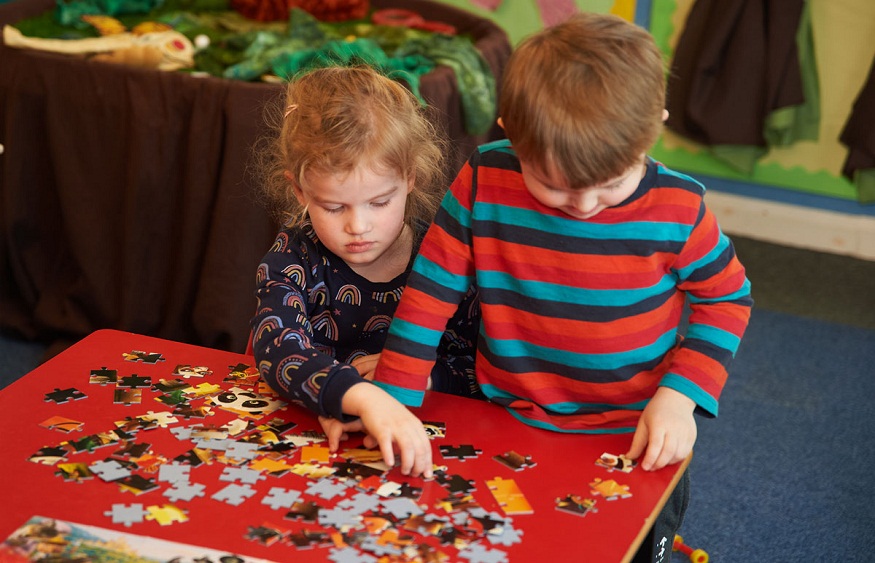
Ask a child what they love about science, and you might get an answer that surprises you. It might be the moment a volcano experiment fizzes over the kitchen table. The afternoon they discovered that plants grow towards light. The time they asked “but why?” about something completely ordinary — and found that nobody had a quick answer.
That curiosity is science. And the parents who nurture it early often find that it shapes not just their child’s academic journey, but the way they approach the whole world.
Science doesn’t have to begin in a laboratory. It starts at home, at the breakfast table, in the garden, and in the questions your child can’t stop asking. Here’s how to help your child fall in love with it.
Why a Love of Science Matters More Than Exam Results
It’s easy to think about science in terms of qualifications — GCSEs, A levels, university courses. But that’s getting ahead of the point.
Children who develop a genuine love of science are developing something far more fundamental: the ability to observe carefully, think critically, test ideas against evidence, and change their mind when the facts demand it.
Read More : Poetry – The Spontaneous Overflow of Powerful Feelings
A child who loves science also tends to be more comfortable with uncertainty. They understand that “I don’t know, let’s find out” is not a failure — it’s the beginning of something interesting. In a world that changes fast and rewards adaptability, that mindset is enormously valuable.
Start Young — Curiosity Has No Minimum Age
The good news for parents of young children is that science curiosity is almost universal in the early years. Very young children are natural scientists. They observe, hypothesise and experiment constantly — they just don’t use those words for it.
A toddler dropping food off a highchair tray again and again is running a physics experiment. A nursery-age child who insists on mixing every colour of paint together is investigating what happens when things combine. The challenge isn’t to introduce science to young children; it’s to recognise and encourage the science they’re already doing.
Simple ways to nurture science curiosity at home
● Ask “I wonder…” questions — “I wonder why the sky is blue today” or “I wonder if this sponge will float” invites thinking without requiring a right answer
● Let them make predictions — before you pour water on the cress seeds, ask what they think will happen. The habit of predicting before observing is central to scientific thinking
● Welcome mess — the best science experiments at home tend to involve water, mud, bicarbonate of soda or all three. If possible, create a space where mess is acceptable
● Follow their interests — a child obsessed with dinosaurs is already engaged with palaeontology, geology and evolutionary biology. A child who loves baking is doing chemistry every weekend
● Watch documentaries together — there is no shortage of beautifully made nature and science content. Watching together and talking about what you see reinforces learning and signals that you find it interesting too
Supporting Science Through the Primary Years
As children move through primary school, their scientific thinking becomes more structured. They start learning about forces, materials, living things and the Earth. They begin to conduct more formal experiments and record results.
This is where parental engagement can make a real difference — not by tutoring, but by connecting what happens in school to the world around them.
Talk about science in everyday contexts
Point out scientific principles when you encounter them:
● Why does your breath fog up in cold air?
● What makes bread rise?
● Why does the moon look bigger near the horizon?
You don’t need to know all the answers. Looking them up together is often more powerful than simply providing them.
Visit places that bring science to life
The Natural History Museum, local nature reserves, science festivals, wildlife parks — these experiences lodge in children’s memories in a way that textbooks rarely do. Many children who go on to study science at university can trace their passion back to a single visit or experience that made it feel real.
Choose a school that takes science seriously
The environment in which a child learns science matters enormously. A school that gives children time to experiment, question and explore — rather than rushing them towards the correct answer — builds a very different relationship with the subject.
For families in Oxfordshire, choosing the right setting from the earliest years is worth thinking about carefully. The question of which nursery in Abingdon will give your child the best start is one that comes up sooner than most parents expect — and the answer involves looking not just at facilities, but at how the school approaches enquiry-based learning and whether it genuinely celebrates a child’s curiosity.
Science and the Oxford Independent School Tradition
The Oxford area has a long tradition of academic excellence, and independent schools in and around Oxfordshire tend to place considerable emphasis on developing independent thinkers — children who ask questions, challenge assumptions and pursue ideas with genuine enthusiasm.
Read More : Core digital skills that everyone should know
This culture, when it starts early, shapes how children relate to science throughout their education. Rather than science being something done to them, it becomes something they actively do: exploring, investigating and making sense of the world on their own terms.
The Manor Preparatory School is an independent co-educational day school in Abingdon, Oxfordshire, welcoming boys and girls from age 2 through to 11. Set in a beautiful Georgian manor house on nine acres of grounds, it has been rated ‘Excellent’ across all areas by independent inspectors — with reviewers specifically noting that pupils “approach every day with an overwhelming passion to learn and develop.”
That passion doesn’t happen by accident. It comes from a school that takes curiosity seriously from the very earliest years, creating an environment where children feel safe to question, experiment and sometimes get things wonderfully wrong. You can find out more about the school’s full offer at www.manorprep.org.
Science Is a Way of Seeing the World